

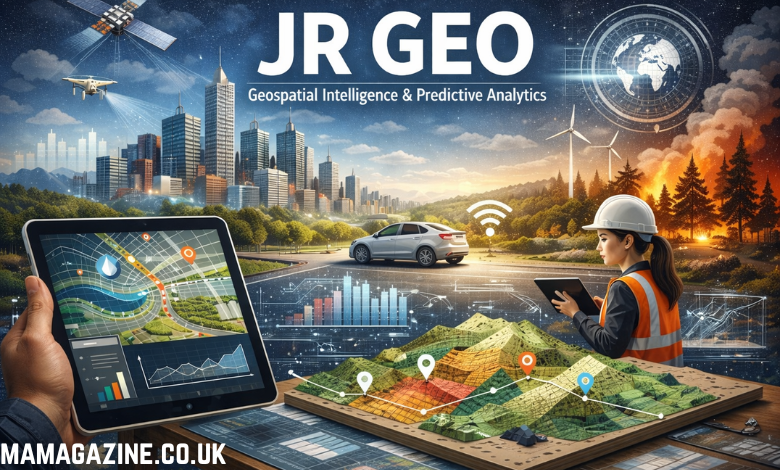
In a world that increasingly demands real-time information and data-driven decision-making, understanding and responding to geographical information has never been more crucial. From urban planning and transportation management to environmental monitoring and climate response, JR Geo is emerging as a key player in the intersection of technology, education, and professional development. But what is JR Geo, and why does it matter?
What is JR Geo?
JR Geo is a modern geospatial intelligence framework that integrates two core concepts: Journaling and Real-time Geospatial Intelligence. It’s more than just a map or a tool for mapping geographic information—it’s a dynamic, interactive system designed to collect, analyze, and respond to geographic data in real time. This makes it a powerful asset for a wide range of industries, including smart cities, logistics, disaster management, and environmental conservation.
At its core, JR Geo represents a toolkit that serves three primary functions:
- Geospatial Intelligence Platform: It connects vast amounts of location-based data to help users understand spatial dynamics and make informed decisions.
- Educational Resource: It provides a gamified educational platform for young learners, promoting geographic literacy and the exploration of geoscience.
- Professional Development: It offers a label for emerging professionals in the field of geoscience, fostering the development of junior geoscientists who will drive future advancements in Earth sciences.
What sets JR Geo apart from traditional geospatial systems is its emphasis on real-time data acquisition and integration. It is not merely a tool for visualizing geographical information; it is an ecosystem that continuously collects, processes, and analyzes data in real time to make predictions, forecast trends, and respond dynamically to changes in the environment.
A Living Geospatial System
JR Geo goes beyond static maps or traditional Geographic Information Systems (GIS). It functions as a living ecosystem that constantly evolves by interacting with real-time data streams. Through the integration of IoT sensors, GPS devices, mobile phones, and satellite imagery, JR Geo is able to create a rich, dynamic representation of the world.
For example, in urban settings, JR Geo can track traffic flows, measure air quality, or monitor pedestrian movement. It takes the data from these sources and merges them into a comprehensive digital twin—a virtual model of the physical world. This digital twin allows users to simulate changes to real-world environments before they happen. This predictive capability is useful in a variety of scenarios, from urban planning to disaster preparedness.
JR Geo’s ability to predict future events—such as forecasting traffic patterns, predicting flood zones, or estimating the impact of environmental changes—makes it an invaluable tool for decision-making. This real-time capability sets JR Geo apart from traditional mapping and GIS technologies that typically operate on static data sets.
Core Technologies Behind JR Geo
The foundation of JR Geo lies in several critical technologies that contribute to its adaptability and intelligence. These technologies work in tandem to ensure the system’s accuracy, responsiveness, and scalability.
- Data Acquisition and Real-Time Feedback Loops: JR Geo relies on real-time data gathered from a wide array of sources, including GPS devices, IoT sensors, mobile phones, and satellite imagery. This allows it to monitor and respond to changes as they occur, providing decision-makers with the most up-to-date information available.
- The Digital Twin Concept: The digital twin is a virtual replica of physical environments, offering a comprehensive, real-time simulation of what is happening in the real world. This enables the system to visualize scenarios before they unfold, providing decision-makers with a powerful tool for planning, forecasting, and risk management.
- Predictive Analytics: The integration of predictive analytics into JR Geo helps to forecast future events based on historical and real-time data. By analyzing past trends and incorporating up-to-the-minute data, JR Geo can predict events such as floods, traffic congestion, or even environmental changes. This ability to forecast future events is crucial for effective planning and optimal allocation of resources.
- Machine Learning and AI: JR Geo leverages machine learning and artificial intelligence to improve the accuracy and adaptability of its system. These technologies allow the platform to learn from past data, adapt to changing conditions, and refine its predictions over time.
Applications of JR Geo
The versatility of JR Geo is apparent in its broad range of applications across various industries. Here are just a few examples of how JR Geo is transforming different sectors:
- Smart Cities: JR Geo plays a vital role in the development of smart cities by providing real-time insights into urban infrastructure. It helps optimize traffic flow, reduce congestion, monitor air quality, and improve waste management. By analyzing real-time data, smart cities can make more informed decisions, leading to greater efficiency and improved quality of life for residents.
- Transportation and Logistics: In the transportation sector, JR Geo offers real-time tracking of vehicles, inventory, and delivery schedules. It can optimize traffic flow by analyzing vehicle movements and pedestrian traffic patterns, reducing congestion and improving transportation efficiency. In logistics, it ensures the efficient movement of goods by tracking shipments and inventory in real time.
- Disaster Management: During natural disasters such as floods, hurricanes, or wildfires, JR Geo helps responders by providing real-time data on affected areas, evacuation routes, and potential risks. The platform can track the location of vehicles, personnel, and resources, ensuring that disaster response efforts are coordinated and effective.
- Environmental Monitoring: JR Geo plays a critical role in environmental conservation efforts by monitoring long-term environmental trends such as deforestation, urban sprawl, and climate change. It helps governments, organizations, and environmental agencies make data-driven decisions to protect natural resources and mitigate the impacts of human activity on the environment.
- Agriculture and Land Use: JR Geo’s geospatial intelligence is used to monitor agricultural land, analyze crop health, and predict harvest outcomes. It also assists in land use planning, helping governments and organizations optimize land use for agriculture, urban development, and conservation.
The Future of JR Geo
The potential of JR Geo is immense, and its applications will continue to evolve as technology advances. As the world becomes increasingly connected through the Internet of Things (IoT), the amount of data available to JR Geo will continue to grow, making it an even more powerful tool for geospatial decision-making.
The rise of autonomous vehicles, smart infrastructure, and intelligent cities will create new opportunities for JR Geo to make an impact. For instance, the integration of self-driving cars with JR Geo could enable more efficient transportation systems by adjusting routes based on real-time traffic and weather conditions. Similarly, the development of smart homes and buildings will benefit from JR Geo’s predictive capabilities, ensuring that energy use is optimized and safety is maintained.
Furthermore, as the world faces growing environmental challenges, JR Geo’s ability to monitor climate change, deforestation, and natural disasters will become even more vital. The system’s ability to integrate diverse data sources and provide actionable insights will be crucial in addressing the environmental challenges of the future.
Conclusion
JR Geo is not just a geospatial intelligence platform—it is a dynamic, living system that has the potential to revolutionize how we understand and interact with the world around us. By combining journaling, real-time data, predictive analytics, and digital twins, JR Geo offers unparalleled insights into geographic information and spatial dynamics. Its applications span a wide range of industries, from smart cities and transportation to disaster management and environmental monitoring.
As technology continues to evolve, the role of JR Geo in shaping the future of geospatial intelligence and real-time decision-making will only become more pronounced. By enabling better planning, forecasting, and decision-making, JR Geo is helping create a more connected, informed, and responsive world.