

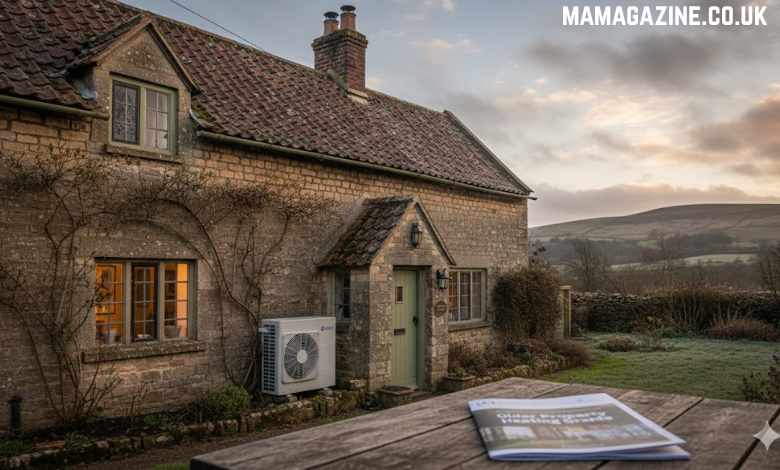
Old houses have character, space, substance, and when it comes to heating, some pretty serious problems come along with them, too. Cold rooms, uneven heat, rising gas bills, and outdated systems are common issues in homes built decades ago. Though many UK homeowners and tenants assume these problems are simply part of living in an older house.
They’re not.
In the UK, heating grants are particularly aimed at older, less efficient properties. This is because older properties tend to be the priority for schemes such as ECO4 because these properties will see the most benefit in energy-saving improvements.
So, yes, there are heating grants available for older houses too, but the rules depend on how your home is heated, its efficiency, and your circumstances. The article discusses how heating grants relate to older properties, what makes them a priority, and what can be achieved with heating improvements.
Why Older Properties Are a Focus for Heating Grants
Homes built before the introduction of modern energy regulations were not designed for efficiency. They employ:
- Non-condensing boilers
- Partial or outdated central heating systems
- Poor insulation
- Inefficient heating controls
These houses are, from an energy policy perspective, expensive to heat and produce a high level of carbon emissions relative to other housing types.
The ECO4 scheme does not look to upgrade every home; it is meant to fix the worst-performing ones first. And that usually includes older properties.
What Counts as an “Older Property”?
There is no strict year cut-off, but properties most commonly considered “older” for grant purposes include:
- Homes built prior to the 90s
- Victorian, Edwardian, or post-war houses
- Older council/ex-council properties
- Converted houses or flats with legacy systems
It’s not just about age – the critical factor is energy efficiency. A lot of the older homes still have EPC ratings of E, F, or G, which would make them a good candidate for grant-funded improvements.
What Types of Heating Grants Apply to Older Homes?
Under ECO4, heating grants are not cash payments. They fund heating upgrades that improve how a home is heated. For older properties, this may include:
- Boiler Replacement
Swapping outdated, energy-draining boilers for advanced A-rated condensing units.
- Installation or Upgrades of Central Heating
Some older homes still lack full central heating or have poorly designed systems. In these, Central Heating Grants may also cover the installation or improvement of radiators, pipework, and controls.
- Heating Controls
Adding thermostats, programmers, or smart controls to systems that at present operate inefficiently.
The exact measures depend on what the property already has – and what will deliver the biggest efficiency improvement.
Are Older Homes More Likely to Qualify?
In many instances, yes. Older properties are most likely to:
- Have inefficient heating systems
- Score below par on EPC assessments
- Waste energy due to old infrastructure
This makes them a higher priority for ECO4 funding, considering they are older and less efficient than newer homes.
However, the property condition itself is not enough. It takes household eligibility as well.
Who Lives in the House Matters
Heating grants are designed to support households in most need that are most affected by high energy costs.
You may qualify if:
- Means-tested benefits are received by someone in the household
- The household income is low enough under Local Authority Flex rules
There is a health or a vulnerability factor associated with cold homes. Particular priority is given to the pensioners, low-income families, and vulnerable residents.
What About Privately Owned Older Homes?
Many people believe that heating grants are strictly for social housing or rented properties. That is simply not the case.
Older owner-occupied homes may qualify if:
- There is an inefficient boiler or heating system
- The EPC rating is low
- The household meets the eligibility criteria
Actually, many grant-funded upgrades are conducted in privately-owned houses that have simply never been modernised.
Are Heating Grants Available to Private Tenants in Older Homes?
Yes – with landlord permission. Private tenants living in older, poorly-heated properties are often eligible, provided:
- The landlord agrees to the work.
- The tenant meets household eligibility rules
- The heating upgrade improves the efficiency of the property.
This can also be advantageous for landlords because it increases the value of the property and can help meet minimum energy standards.
Why EPC Ratings Matter More Than a House’s Age
It just might be due to the fact that two homes built in the same year can have very different energy performance.
One may have:
- A modern boiler
- Insulation upgrades
- Efficient controls
The other may still rely on its original heating system.
Decisions on grants come from EPC ratings and not from construction dates. Pre-existing homes that perform poorly on EPC ratings stand a stronger chance of being granted funding than newly constructed homes that already meet efficiency standards.
What Kind of Heating Improvements Typically Qualify for Financing?
In older buildings, approved improvements usually include:
- Replacing non-condensing boilers
- A full central heating system (if none existed previously)
- Upgrading system design to mitigate heat radiation
- Ensuring safe, compliant installations
The intention is to promote efficiency. Luxury upgrades or aesthetic enhancements are excluded.
Are Older Properties Ever Refused?
Yes, and it’s crucial to recognise why. A heating grant may not be authorised if:
- The property already has an efficient heating system
- The EPC rating is too high
- The household does not meet the eligibility criteria
- The upgrade will have little impact on efficiency.
This explains the importance of carrying out the survey before the actual work commences.
Why Older Homes Often See the Biggest Savings
When an old heating system is replaced in an older property, the difference is usually noticeable immediately:
- Faster heating
- More consistent room temperatures
- Lower gas usage
- Fewer breakdowns
For households that have put up with cold rooms or boilers that don’t work for years, it will be life-changing.
Common Myths About Heating Grants and Older Properties
“My house is too old to qualify.”
Generally, older homes make some of the best candidates.
“Grants are only for new build homes.”
Completely false – new builds seldom qualify.
“You have to pay everything beforehand.”
Eligible households do not pay anything at all.
The Bottom Line
Heating grants are not only available for older properties, but they are also mainly designed for them. Under the ECO4 scheme, the focus is on upgrading inefficient homes where heating costs are highest and comfort levels are lowest. This is a perfect fit for older properties when they are occupied by eligible households, particularly those looking to access first time central heating grants Wales to replace inefficient standalone heaters or outdated systems with a modern solution.
So, if you live in an older home that still relies on outdated heating, assuming you “missed the chance” to modernise could be a costly mistake. Check your eligibility and upgrade your old home today!